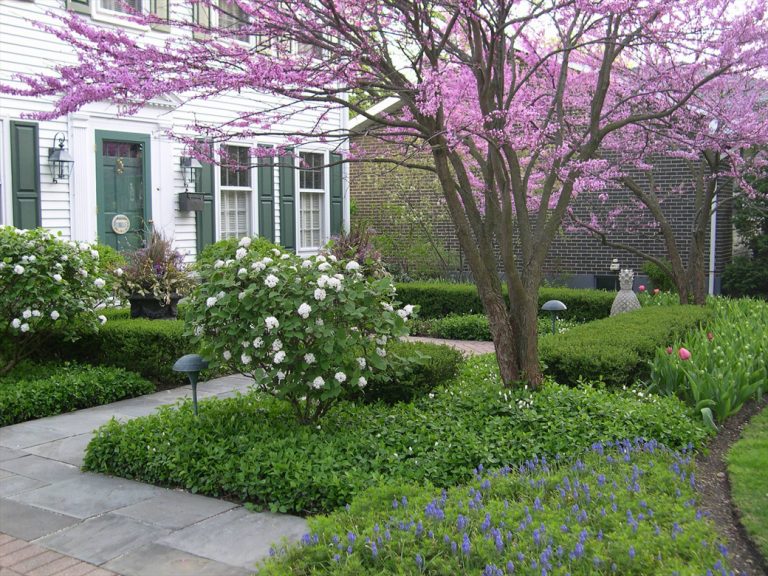

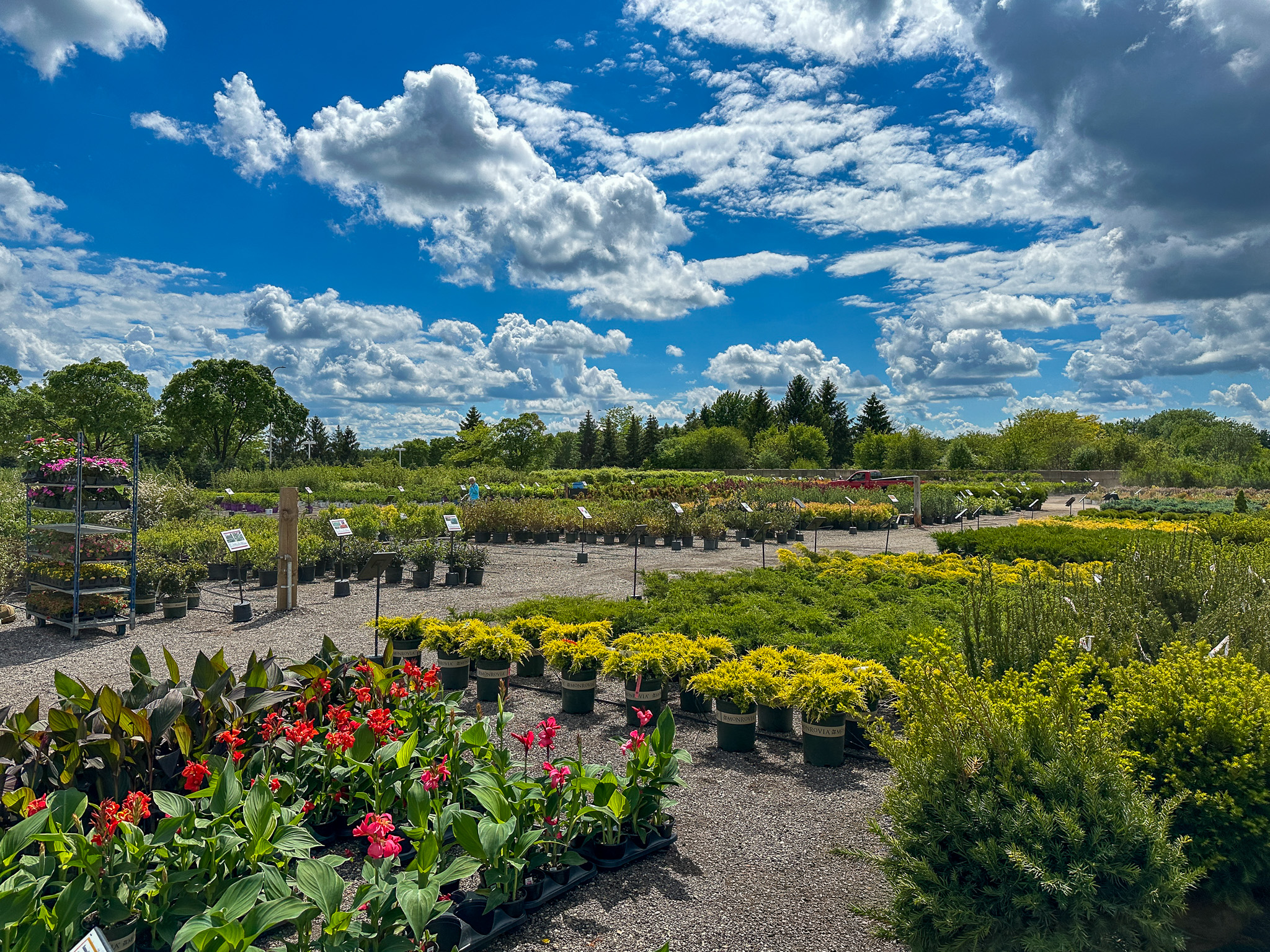
May is the month you finally stop checking the forecast and start planting.
What makes May different isn’t just that you can plant, but that things establish quickly. The soil is warm, days are longer, and plants respond almost immediately. If done right, what you plant now carries itself through the rest of the season.
Planting in May works in your favor
By May, soil temperatures have climbed into a range where roots actually want to grow. That’s the piece that matters most.
Trees, shrubs, perennials, and annuals can all be planted now, and they’ll establish faster than they would have just a few weeks earlier. Warmer soil encourages root development, and longer days push top growth to catch up quickly.
This is one of the few times of year when planting feels straightforward, and usually is.
Watering makes the difference
If there’s one place people unintentionally create problems, it’s here.
New plants don’t need constant watering, but they do need consistent watering. Deep, thorough watering encourages roots to grow down into the soil, which is what gives plants resilience later on.
A good baseline is about an inch of water per week, but the real goal is making sure that water reaches the root zone, not just the surface.
Most mid-summer struggles trace back to what happened here in May.
Mulch now, not when it’s already hot
Mulch is easy to treat as optional, but it quietly does a lot of work.
A couple of inches around new plantings helps hold moisture, keeps soil temperatures more stable, and can reduce weeds. Putting it down now before the heat really builds gives plants a more stable environment to establish.
It’s a small step that tends to make everything else easier.
Don’t plant everything too tightly
In May, everything looks a little small. That’s usually when spacing gets ignored. Plants that look like they need to be “filled in” right away won’t stay that size for long. As the season progresses, they expand, overlap, and compete for airflow and light.
Giving plants room now means less crowding, fewer disease issues, and a better-looking garden by mid-summer.
This is also a good time to reset what’s not working
Late May is a useful checkpoint in the garden.
You can see what’s filling in well, what feels off, and where things aren’t quite performing. If something needs to be moved, divided, or replaced, this is the time to do it, while conditions are still relatively mild.
Fall-blooming perennials, in particular, can be divided now if they’ve become crowded or uneven.
Don’t treat May like the finish line
It’s easy to think of May as the big push, but it’s really the setup.
Over the next few weeks, roots establish, watering habits take hold, and plants adjust to their environment. The more stable things are now, the better they’ll handle the heat and stress that comes later.
A simple May checklist
- Plant what you’ve been waiting to plant
- Water deeply and stay consistent
- Add mulch around new plantings
- Give everything a little more space than feels necessary
- Adjust anything that already looks off
May is one of the most forgiving times to garden in the Midwest. Things grow quickly, plants establish much more easily, and small decisions tend to work in your favor.
Take advantage of that and set things up so they keep working long after the weather changes.
Connect with Us!
630-323-1411
7200 S. Madison St.
Willowbrook, IL
Blog: https://hinsdalenurseries.com/blog
Facebook: https://www.facebook.com/HinsdaleNursery
Pinterest: https://www.pinterest.com/hinsdalenursery/
Twitter: www.twitter.com/HinsdaleNursery
Instagram: www.instagram.com/Hinsdale_Nurseries/
YouTube: https://www.youtube.com/channel/UC5GUOu9abCvL9ZDNJBSunrA
Website: https://hinsdalenurseries.com/