
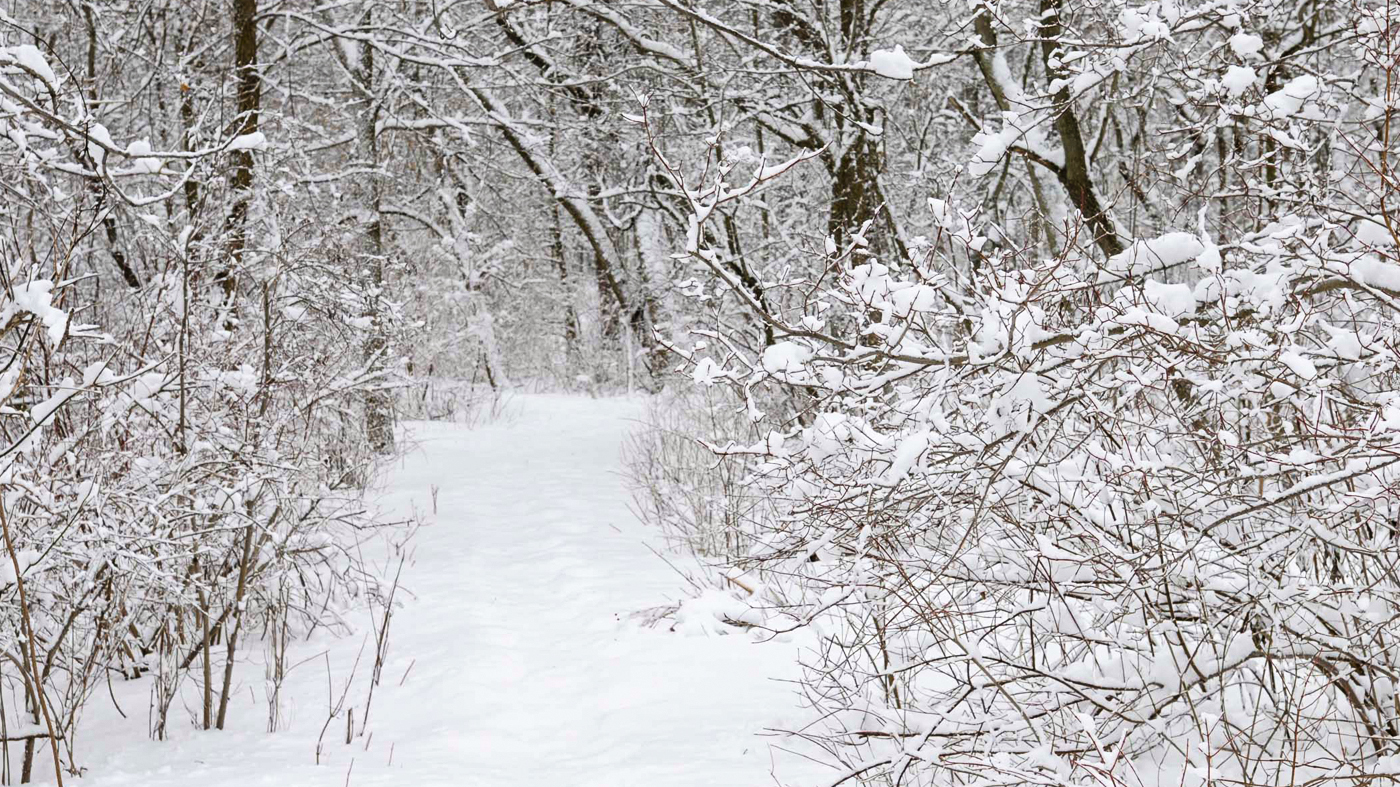
When the flowers fade and the leaves fall, it’s easy to think the garden has nothing left to offer. But winter has a way of showing things off that we sometimes overlook during the growing season.
Colorful branches, textured bark, bright berries, and evergreens can turn an otherwise quiet landscape into something worth admiring, even in the middle of a Chicago winter.
The secret is choosing plants that offer more than just beautiful blooms. Some of the best additions to your landscape look just as good in February as they do in June.
Here are five favorites that bring color, texture, and interest to the garden in winter.

Bailey Redtwig Dogwood
Cornus sericea ‘Bailey’
If your landscape could use a pop of color during the winter months, Bailey Redtwig Dogwood is hard to beat.
Throughout spring and summer, this hardy shrub offers green foliage, clusters of small white flowers, and berries that attract birds. Come fall, its leaves turn shades of red and purple. But its most impressive feature doesn’t appear until those leaves are gone. Bright red stems create beautiful contrast against fresh snow, evergreens, and the muted colors of winter.
Bailey is especially effective when planted in groups or used as an informal hedge. It also tolerates moist and occasionally wet soil, making it a useful choice for areas where some other shrubs struggle.
Growing Tips:
- Light: Sun to shade, with the strongest stem color generally developing in full sun.
- Size: Approximately 7–9 feet tall and 6–8 feet wide.
- Soil: Prefers moist soil and tolerates wet conditions. Avoid excessively dry locations.
- Design Tip: Plant Bailey Redtwig Dogwood in front of dark green evergreens. The contrasting colors make those red stems stand out even more.
LEARN MORE ABOUT BAILEY REDTWIG DOGWOOD
••••••••••••••••••••••••••••••
 Berry Poppins® Winterberry
Ilex verticillata ‘FarrowBPop’
This native deciduous holly drops its leaves in fall, revealing clusters of brilliant red berries along its bare branches. The result is a beautiful burst of color that can last into winter, depending on weather conditions and how quickly the birds discover them.
Berry Poppins® is a compact variety, making it especially appealing for smaller gardens, foundation plantings, and grouped shrub borders.
It’s also a great way to bring wildlife value into the landscape. Birds, including robins and cedar waxwings, feed on winterberry fruit when other food sources become scarce.
Growing Tips:
- Light: Part shade to sun.
- Size: Approximately 3–4 feet tall and wide.
- Soil: Average to wet.
- Important to Know: Winterberry plants are either male or female. To produce berries, a female Berry Poppins® needs a compatible male pollinator nearby. Mr. Poppins® Winterberry is an appropriate companion, ideally planted within 50 feet.
- Design Tip: Plant winterberry where you can enjoy the berries from a window or walkway. A grouping against evergreens creates an especially colorful winter display.
EXPLORE BERRY POPPINS® WINTERBERRY
••••••••••••••••••••••••••••••
 Paperbark Maple
Acer griseum
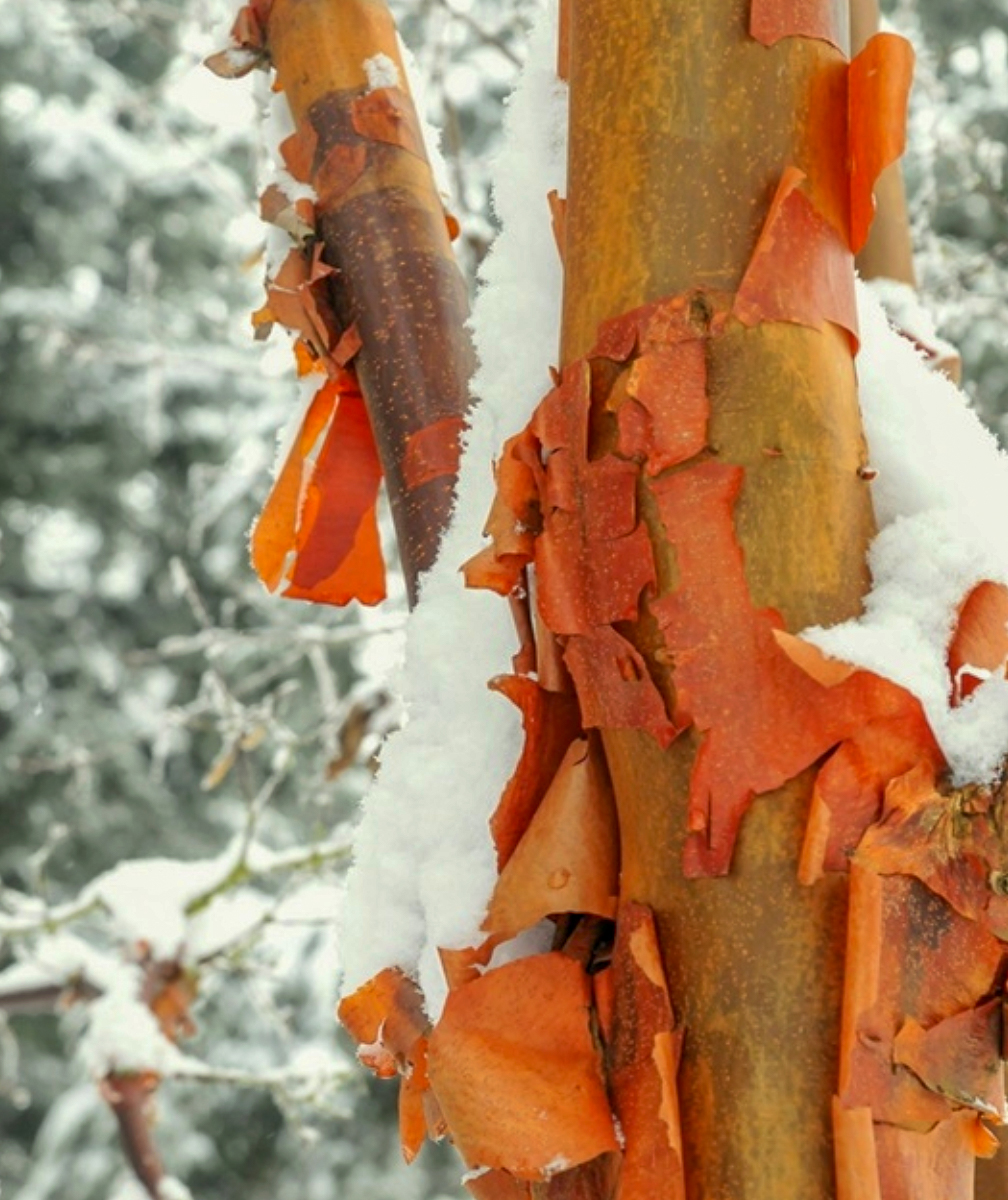
Some trees are known for their flowers. Others are famous for their fall color. Paperbark Maple has another reason to get your attention: its bark.
This tree develops beautiful cinnamon-colored to reddish-brown bark that naturally peels and curls away from the trunk and branches, revealing additional layers underneath.
It’s attractive throughout the year, but winter is when those details really become noticeable. Without leaves hiding the branches, the tree’s unique texture becomes the focal point.
Paperbark Maple also offers lovely red and orange fall foliage. Its relatively modest size makes it a good candidate for residential landscapes where a large shade tree might overwhelm the space.
Growing Tips:
- Light: Sun to shade.
- Size: Approximately 20–30 feet tall, with a spread of 15–30 feet.
- Soil: Performs well in clay soil.
- Design Tip: Place a Paperbark Maple where its trunk and branches can be appreciated up close, such as near a patio, walkway, or frequently used window. The peeling bark looks particularly beautiful when illuminated by low winter sunlight.
••••••••••••••••••••••••••••••
Northwind Switch Grass
Panicum virgatum ‘Northwind’
Some ornamental grasses become even more interesting as the seasons change.
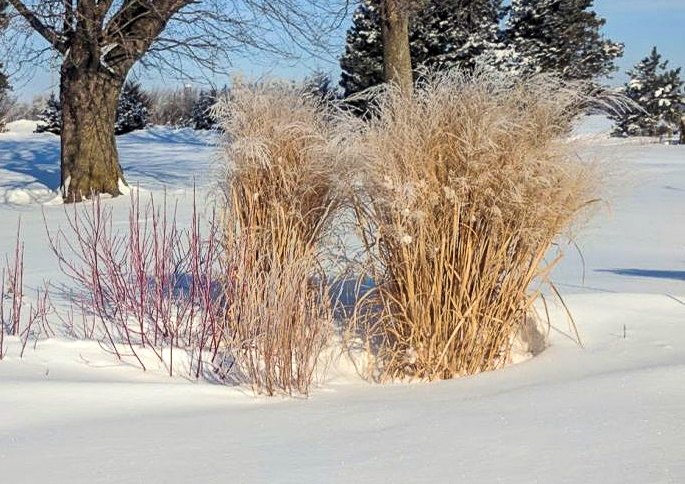
Northwind Switch Grass is a cultivar of our native switchgrass, known for its strong, upright growth and narrow, architectural shape.
During the growing season, its blue-green foliage provides texture and height. As temperatures cool, the foliage turns golden and eventually tan. Its airy seed heads and upright stems can remain attractive well into winter, catching the light, moving with the wind, and creating contrast against snow.
Northwind also has practical benefits. Once established, it tolerates drought and a range of soil conditions, including clay. Its standing stems and seed heads can provide food and habitat for wildlife in winter, too.
Growing Tips:
- Light: Sun.
- Size: Approximately 4–5 feet tall and 2 feet wide.
- Soil: Adaptable to a range of soils, including clay, provided the planting site is appropriate.
- Design Tip: Plant Northwind in groups alongside evergreens, flowering perennials, or shrubs with colorful winter stems. Its vertical shape provides structure without making a planting bed feel crowded.
And don’t be too quick to clean up those dried grasses! Leaving healthy stems standing through winter can benefit overwintering insects and other wildlife.
LEARN MORE ABOUT NORTHWIND SWITCH GRASS
••••••••••••••••••••••••••••••

Black Hills Spruce
Picea glauca ‘Densata’
No winter landscape would be complete without a dependable evergreen. Black Hills Spruce is a dense, pyramidal conifer with attractive green to blue-green needles. Its full shape and year-round foliage provide color and structure when the surrounding deciduous trees have lost their leaves.
It’s also a valuable addition for wildlife. Its branches provide shelter and nesting opportunities for birds, including protection from harsh winter weather.
Black Hills Spruce works well as a specimen tree, a landscape focal point, or part of a larger evergreen grouping. Its dense growth can also provide screening when planted with adequate space.
Growing Tips:
- Light: Sun.
- Size: Can eventually reach approximately 40–60 feet tall and 15–25 feet wide. Allow plenty of room for mature growth.
- Soil: Prefers moist, well-drained soil.
- Design Tip: Use Black Hills Spruce as a backdrop for ornamental grasses, winterberries, and shrubs with colorful stems. The evergreen foliage creates a beautiful contrast while giving the landscape a sense of structure throughout the year.
••••••••••••••••••••••••••••••
The most interesting winter landscapes are the ones with the right combination.
Think about how different elements work together. The bright red stems of dogwood against deep green spruce. A grouping of winterberries near an entryway. Tall ornamental grasses adding movement to a garden bed. The beautiful peeling bark of a Paperbark Maple catching the afternoon sunlight.
These details can make a big difference when the rest of the garden is dormant.
And here’s something worth remembering: Winter is a great time to evaluate your landscape. Without all the summer foliage, it’s easier to spot areas that lack structure, color, privacy, or visual interest.
Take a walk around your property this season and pay attention to what you see from your windows, walkways, and outdoor spaces. You might discover the perfect place for something new.
Of course, choosing the right plant involves more than picking your favorite from a photograph. Sun exposure, soil conditions, drainage, mature size, and the challenges of our Chicagoland climate all play a role in creating a healthy, lasting landscape.
At Hinsdale Nurseries, we know that a beautiful landscape should offer something to enjoy in every season. With more than 175 years of growing experience, we’re here to help you choose the right plants and create outdoor spaces that look beautiful year after year.
Our Landscape Design & Build team can help with everything from adding a few thoughtfully placed trees and shrubs to creating a complete landscape plan.
Have an idea for your garden in 2027? Let’s talk about it.
Contact our Landscape Design & Build team at 630-323-1411, Option #3, or email ksahli@hinsdalenurseries.com
Connect with Us!
630-323-1411
7200 S. Madison St.
Willowbrook, IL.
Blog: https://hinsdalenurseries.com/blog
Facebook: https://www.facebook.com/HinsdaleNursery
Pinterest: https://www.pinterest.com/hinsdalenursery/
Twitter: www.twitter.com/HinsdaleNursery
Instagram: www.instagram.com/Hinsdale_Nurseries/
YouTube: https://www.youtube.com/channel/UC5GUOu9abCvL9ZDNJBSunrA
Website: https://hinsdalenurseries.com